
Why Our Technology Matters
Why? — The Problem We Solve
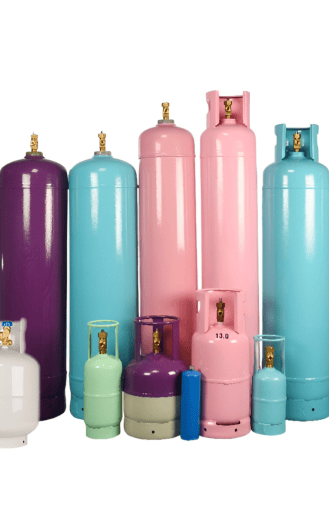
In our rapidly evolving world, we are confronted with numerous challenges that demand our attention and action. For decades, we have embraced various technologies with enthusiasm, often without fully grasping the long-term consequences of our choices. Current thermal systems rely on synthetic refrigerants and face fundamental constraints that create urgent commercial opportunity.
A Global Issue resulting in Regulatory Phase-Downs & Compliance Burden
Kigali Amendment (171 countries): 85% HFC reduction by 2036 (developed) / 2045 (developing)
US AIM Act (2020): 85% HFC reduction by 2036, GWP ≤700 mandatory since January 2025
EU F-Gas Regulation (2024/573): Accelerated phase-down creating refrigerant quotas and price volatility
Corporate net-zero commitments requiring verifiable emissions reductions across scope 1, 2, and 3
Impact: Refrigerant supply uncertainty, cost increases, extensive leak detection and reporting requirements
Lifecycle GHG (Green House Gas) Risk from Leakage
Conventional systems leak 5-30% of refrigerant charge annually
Impact: Scope 3 emissions reporting burden, ESG liability, corporate net-zero compliance challenges
Supply Chain Dependency & Energy Security Risk
Fluorspar, the foundational raw material for all synthetic refrigerants, is a finite mineral resource with reserves concentrated in a small number of countries.
Approximately 65% of global HFC production is controlled by a small number of chemical manufacturers, with similar concentration in fluorspar mining and processing.
HFO refrigerants, marketed as the next-generation solution, are controlled by a two-company chemical duopoly. Switching from HFCs to HFOs changes who holds the dependency — it does not remove it.
Impact: Supply disruption risk, price volatility, long-term resource constraint — structural vulnerabilities that no regulatory phase-down addresses and no refrigerant chemistry change solves.
Performance limitations of current systems - narrow operational envelopes
Cold Weather: Most residential heat pumps lose 40-50% capacity below 0°C; auxiliary electric heat (COP ~1.0) negates efficiency
High Temperature: Standard systems typically max out at 60-70°C; high-temperature systems (90-160°C) have extremely limited availability and 2-4× cost
Industrial Applications: Pharmaceutical (sterilisation 121-134°C + freeze-drying -40°C), chemical processing (150-250°C), semiconductor (cycling -40°C to +200°C) require multiple separate systems
Impact: 2-3× capital cost, complex integration, high maintenance, large overhead and footprint
How? — Our Approach
Early-stage thermal output — Cooling below -40°C and heating above 120°C, by the same system and at the same time
A unified system designed to deliver both usable heat and cooling for adjacent needs, with the additional capability to cascade modules and thereby extend the system's temperature range. These advanced thermal features enable a wide array of valuable applications across multiple sectors.
High thermal efficiency
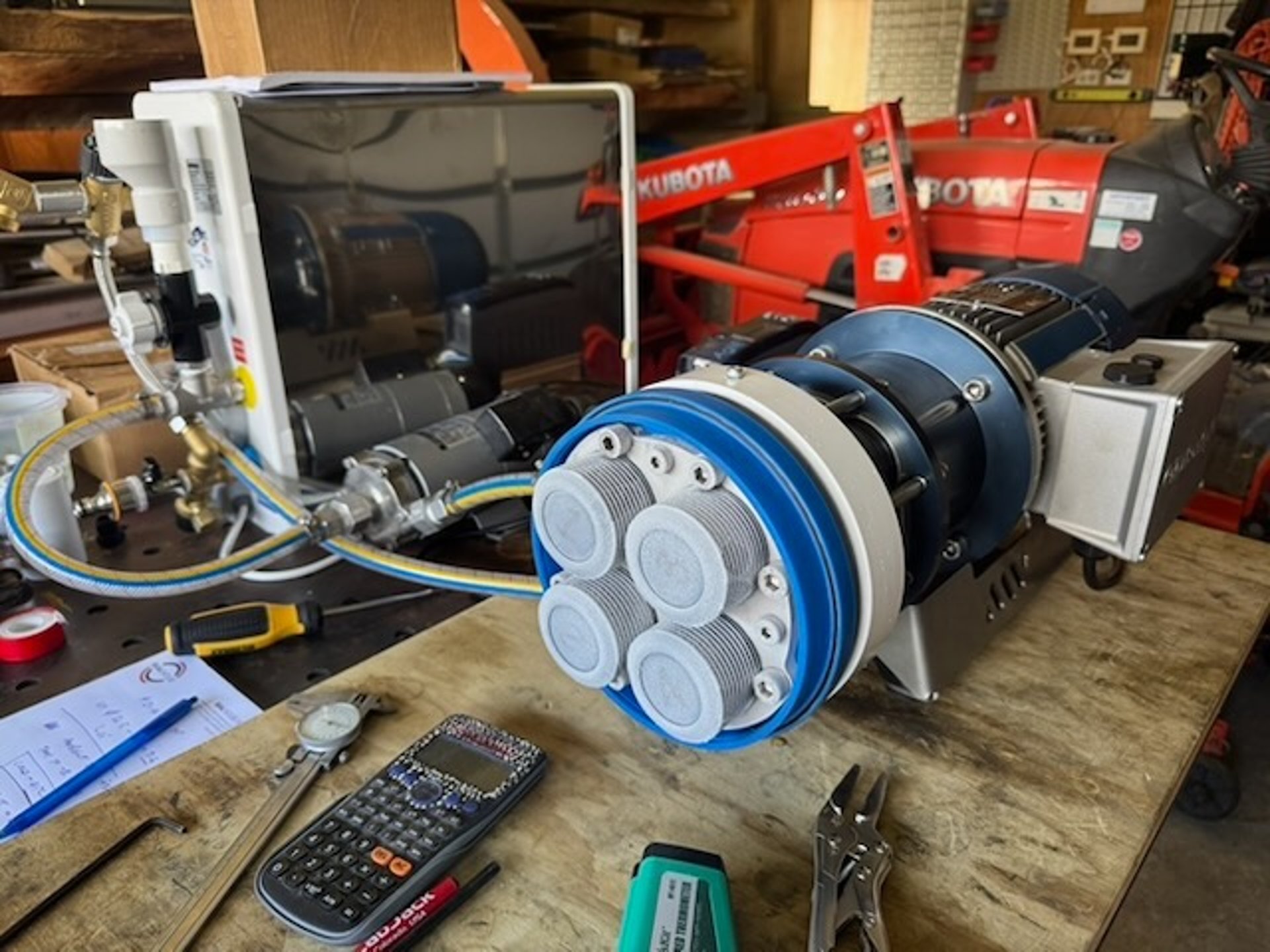
The system’s rapid response time demonstrates its high thermal efficiency. However, its potential is currently constrained by its mechanical transmission, which converts rotational motion to linear motion. While this has been invaluable for testing purposes and has proven the system’s thermodynamic capabilities, it remains limited by its inherent complexity. To address this challenge, we are developing a proprietary electric drive system, while also optimising the thermodynamic cycle, aimed at achieving efficiency levels comparable to or exceeding those of established technologies, without compromising performance advantages.
Zero refrigerant procurement, servicing and phase-down risk
This eliminates the need for leak detection systems, periodic recharging, regulatory reporting and technician certification requirements.
Energy Security & Supply Chain Independence
Our approach doesn't just solve an emissions problem — it eliminates a supply chain dependency. No fluorochemicals. No finite mineral inputs. No reliance on concentrated chemical manufacturers or proprietary chemistry duopolies. A fundamentally different infrastructure proposition — and for operators of critical facilities, it may matter more than the emissions case.
Simplified installation and maintenance
Standard HVAC installation skills are required; no specialised refrigerant handling is necessary; and maintenance costs are 40-60% lower compared to refrigerant systems.
Our refrigerant-free approach provides zero-emission operation without compromising safety, pressure, toxicity or flammability
This offers superior environmental performance, thermal performance and regulatory future-proofing
With our Refrigerant-Free Thermal Transfer — Our patented thermodynamic platform is a masterstroke in technological advancement that eliminates the need for refrigerants entirely through proprietary mechanisms. This innovation is based on a novel approach to the Stirling engine utilising advanced working principles.
The result is a modular, scaleable platform that delivers
+64 21 416 286 • info@mv.nz • © 2026 MagValve Ltd • All rights reserved
Join us in transforming the future of thermal management
Together, we can eliminate billions of tons of greenhouse gas emissions while building a market-leading sustainable technology company